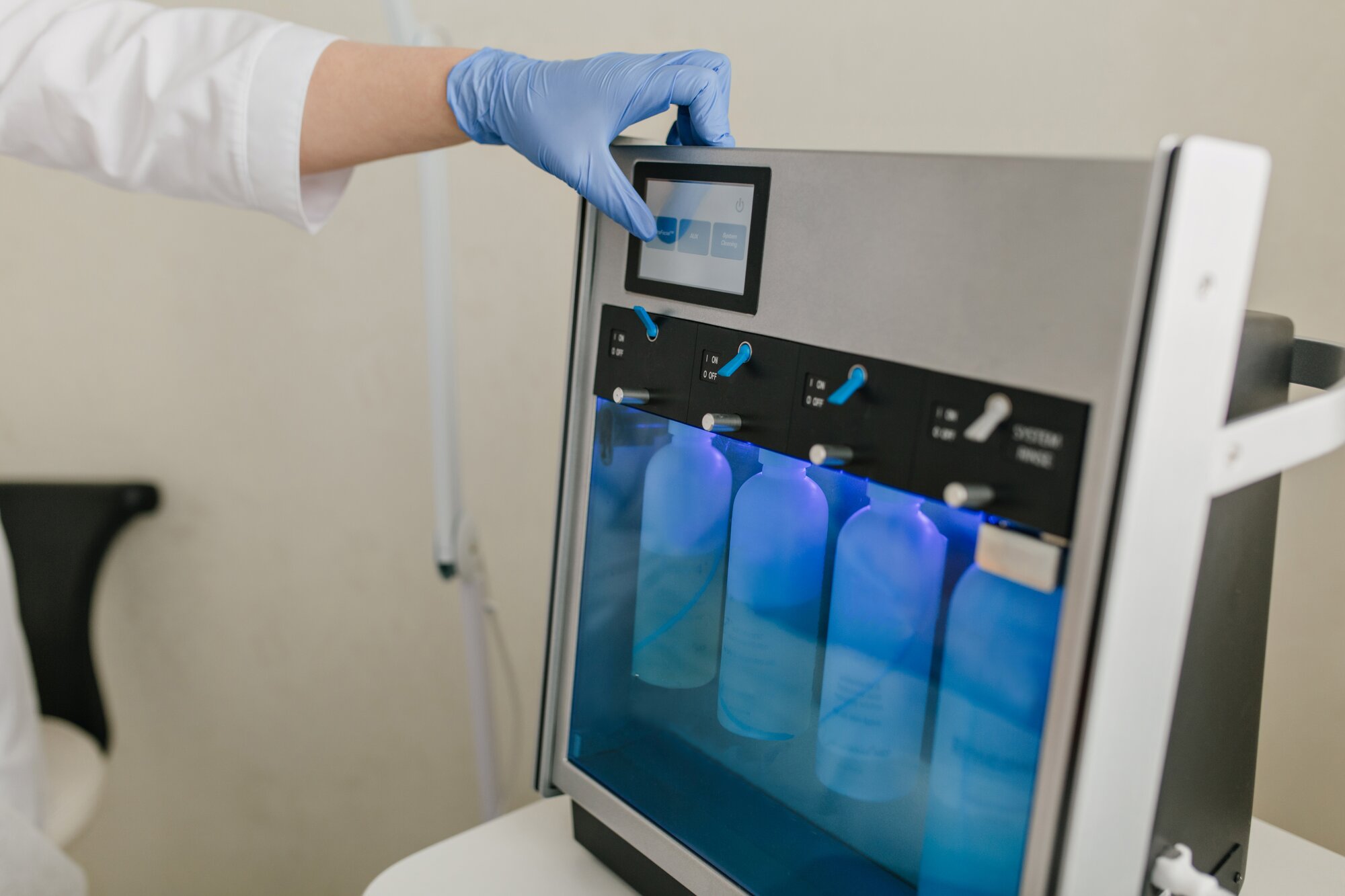
A returning client partnered with us to develop an integrated chromatography and detection instrument that automates chemical purification. This user-friendly device boosts accuracy, streamlines workflows, and lets chemists focus on critical research rather than manual tasks.
Customer Profile
An innovative scientific instrumentation company focused on streamlining chemical purification workflows for laboratory researchers, particularly in pharmaceutical and discovery chemistry sectors.
Challenge
Chemists routinely lose valuable time operating chromatography equipment—setting up, monitoring, and troubleshooting failures. Existing machines often missed certain compounds and required additional steps, increasing costs and inefficiencies. Our client needed a smarter, compact chromatography device capable of detecting a wider range of substances while eliminating repetitive tasks.
The product would have to integrate subsystems like RFID, heaters, fluidics, and sensors in a small enclosure. It also had to guide users through each phase—set-up, purification, and maintenance—with an intuitive interface. Our team was trusted to deliver this complex, multi-disciplinary instrument with precision and speed, from research to full lifecycle development. The ultimate goal: transform purification from a bottleneck into a streamlined process supporting faster scientific breakthroughs.
Solution Summary
We delivered a compact, user-friendly chromatography instrument that integrates detection, automation, and advanced signal processing using our SoM and interdisciplinary engineering expertise.
Solution
Our team handled the entire development process—from concept to manufacturing—delivering a revolutionary chromatography system. We conducted extensive user research in labs to identify ergonomic and functional needs. Working with the client, we integrated over 30 sensors and 20 actuators into a single, compact enclosure. Our engineers designed 75 custom parts and implemented RFID for automated workflow monitoring.
Using our SoM technology, the system runs a Windows XP-based GUI developed via Microsoft’s .NET platform. An FPGA with embedded softcore logic managed real-time control of pumps, motors, and sensors. The device’s advanced algorithm merged detector signals to identify previously undetectable compounds. Seamless integration with laboratory information systems further automated output logging. Concurrent engineering and NPI procedures minimized redesigns and enabled early manufacturability validation, ensuring a rapid, risk-reduced path to production.
Result
The resulting device offered unmatched efficiency in chromatography, setting a new benchmark for chemical purification. Our company’s integrated development approach reduced time, cost, and risk, helping the client launch in February 2009. The product has since earned multiple innovation awards and remains in active production and support today.
D&E & FPGA