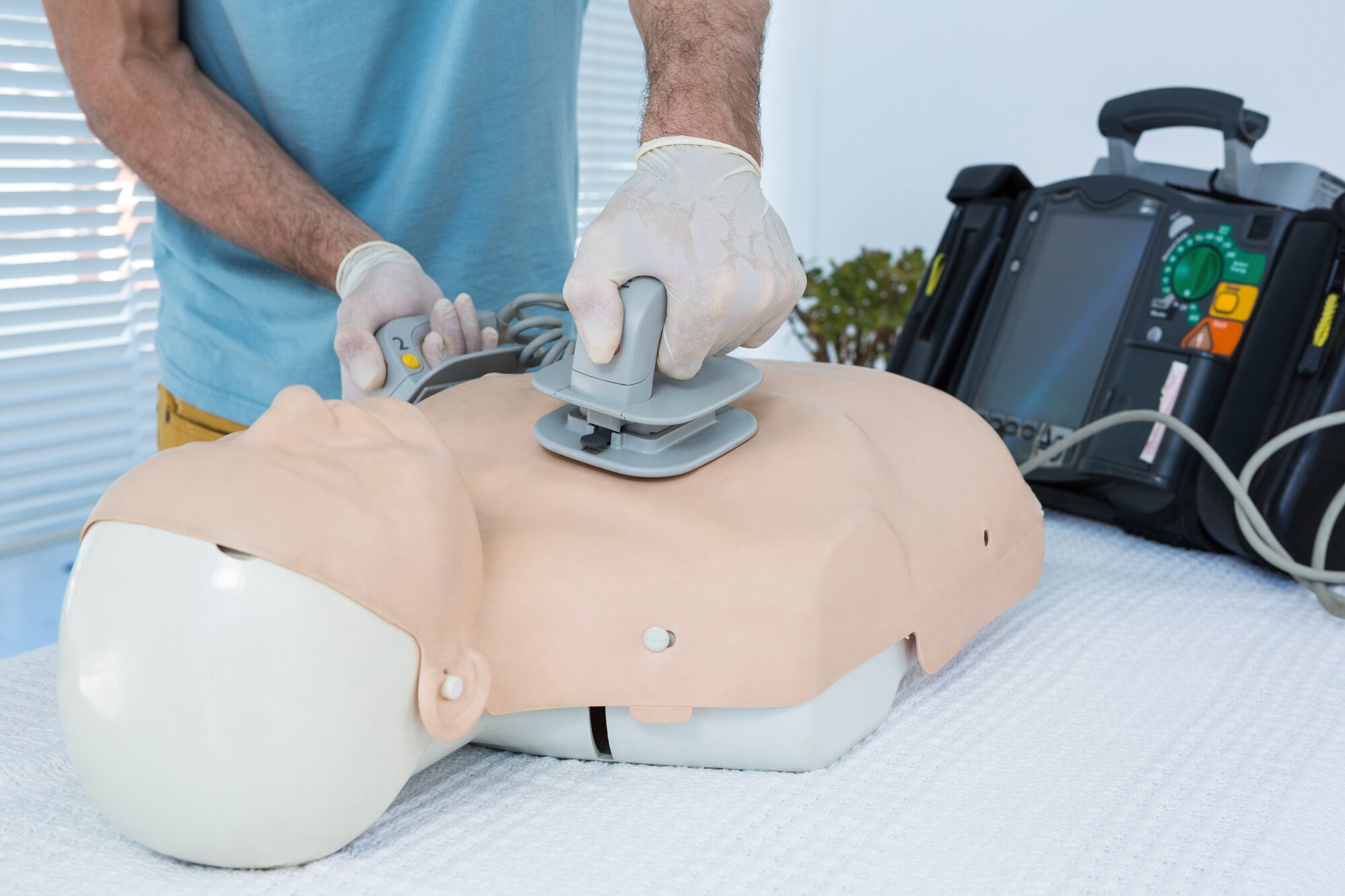
The customer aimed to create a compact, rugged Wi-Fi defibrillator monitor to help first responders send real-time patient data to hospitals. Partnering with our team, they accelerated the design and production of this vital life-saving device.
Customer Profile
The customer is a well-established leader in the global medical device industry, known for creating innovative emergency care solutions including portable defibrillators, patient monitors, and resuscitation systems used by first responders and hospitals worldwide.
Challenge
As emergency care technology evolved, the customer aimed to create a next-generation defibrillator monitor with integrated patient monitoring and wireless data transmission. The goal was a device that was smaller, more powerful, and more rugged than anything else on the market. The ability to send patient vitals over Wi-Fi would allow doctors to begin treatment preparation before the patient arrived at the hospital—potentially saving crucial minutes. However, integrating network connectivity, ensuring power efficiency, maintaining reliability, and meeting strict regulatory standards presented significant engineering challenges.
All this needed to be done under a compressed timeline to maintain their competitive edge. The customer partnered with our engineering and manufacturing teams to integrate wireless capability, accelerate development, and prepare the product for rapid testing and production.
Solution Summary
We integrated our compact Torpedo SoM to deliver high performance and wireless connectivity, enabling fast data transmission in a rugged defibrillator monitor..
Solution
To meet the tight schedule, we coordinated closely with the customer while our electrical, mechanical, and software teams tackled design and integration. With limited space inside the device, our engineers recommended our ultra-compact Torpedo SoM, offering powerful performance in a sub–1-inch form factor.
This enabled advanced processing without compromising size or efficiency. We customized the SoM for compatibility with the Wi-Fi radio and ensured secure, reliable wireless transmission through signal processing enhancements.
Knowing the device would undergo rigorous certification, we proactively built a custom test fixture to verify every board’s performance before delivery. After device assembly, the customer returned to us for assistance with end-unit testing. Our quality assurance ensured the finished product met all technical and regulatory benchmarks.
Result
The final product was 60% smaller and 35% lighter than competing devices, while offering reliable real-time data sharing. Following its success, the customer engaged us again to develop a second-generation model with more memory and audio features. That version launched within two years, strengthening the long-term partnership and expanding our role in their future medical innovations.
Torpedo System-on-Chip (SOC)